Ingredients
| Name | Amount (Metric / US) |
|---|---|
| BROWN SUGAR | 220 g / 1 cup |
| NAPA CABBAGES | 3 |
| COARSE SEA SALT | 1.17 kgs / 4 cups |
| FISH SAUCE | 116 ml / 0.50 cups |
| GARLIC CLOVES | 12 |
| GINGER | 2 Tbsps |
| GOCHUGARU | 946.35 g / 4 cups |
| GREEN ONIONS | 3 |
| RADISH | 232 g / 2 cups |
| RICE FLOUR | 3 Tbsps |
| ONION | 1 |
| SAEWUJEOT | 4 Tbsps |
| SAEWUJEOT | 4 Tbsps |
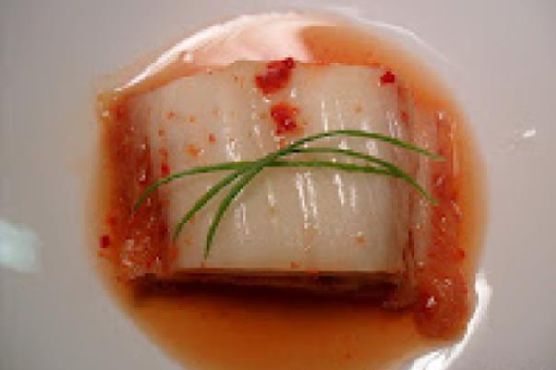
Kimchi/Kimchee/Gimchi (Korean Fermented Spicy Cabbage)
Kimchi/Kimchee/Gimchi (Korean Fermented Spicy Cabbage) might be a good recipe to expand your side dish recipe box. Watching your figure? This gluten free, dairy free, and pescatarian recipe has 223 calories, 9g of protein, and 7g of fat per serving. This recipe serves 20 and costs $3.18 per serving. Only a few people made this recipe, and 1 would say it hit the spot. From preparation to the plate, this recipe takes around 45 minutes. It is a rather expensive recipe for fans of Korean food. If you have brown sugar, garlic cloves, saewujeot, and a few other ingredients on hand, you can make it. It is brought to you by Foodista. Overall, this recipe earns a good spoonacular score of 46%. Basic Napa Cabbage Kimchi (Kimchee), Basic Napa Cabbage Kimchi (Kimchee), and Cucumber Kimchi (Oi Gimchi) are very similar to this recipe.
Instructions
- 1. Remove discolored, bruised outer leaves of cabbage and rinse well under cold water. Cut cabbage head into desired pieces; smaller 2-inch pieces is recommended for easier access later. In 3 separate large bowls, prepare one cup sea salt and water mixture for each bowl. Sprinkle remaining 1 cup of sea salt onto the leaves of the cabbages before soaking them in the salt water. Cabbages should be partially submerged in the salt water. Let sit for a minimum 6 hours but 12 hours is preferred.
- 2. Once finished soaking, rinse the cabbage leaves thoroughly under cold water several times. Remove water from the cabbage by giving them a squeeze (they should have a rubbery texture by now) to remove excess water. Set in a colander or basket for at least 2 hours so the water will drain out thoroughly. Meanwhile, prepare the red pepper mixture to be mixed with cabbage leaves.
- 3. Prepare 3 tbsp of the sweet rice flour with 3 cups of water into a small pot. Bring to a boil and whisk until the mixture turns into a glue-like consistency. Let cool and set aside.
- 4. In a food processor, puree onion, garlic, ginger and some water until smooth. Pour gochugaru (chili flakes) in a large mixing bowl, add the garlic mixture puree, cooled rice glue, fish sauce, salted shrimp, sugar, and sesame seeds. Mix well and add the sliced radish and green onions.
- 5. Lather each cabbage piece with red pepper mixture by rubbing them well (rubber gloves highly recommended). Continue until all the cabbage leaves are covered in the red pepper mixture. Pack them inside air-tight glass jars/containers. Set out at room temperature for 2 days for fermentation to take place. After that, place in the refrigerator and serve as needed. The kimchi may keep for 2 or 3 months in the refrigerator.
- *Making kimchi is not easy, but if done right, the rewards are endless. You can take the easy way out and purchase them at your local Korean grocery store and even possibly in the Asian foods section of your local grocery.
Riesling, Gewurztraminer, and Chenin Blanc are my top picks for Kimchi. The best wine for Asian food depends on the cuisine and dish - of course - but these acidic whites pair with a number of traditional meals, spicy or not. The Purple Star Ancient Lakes Riesling with a 5 out of 5 star rating seems like a good match. It costs about 12 dollars per bottle.
